
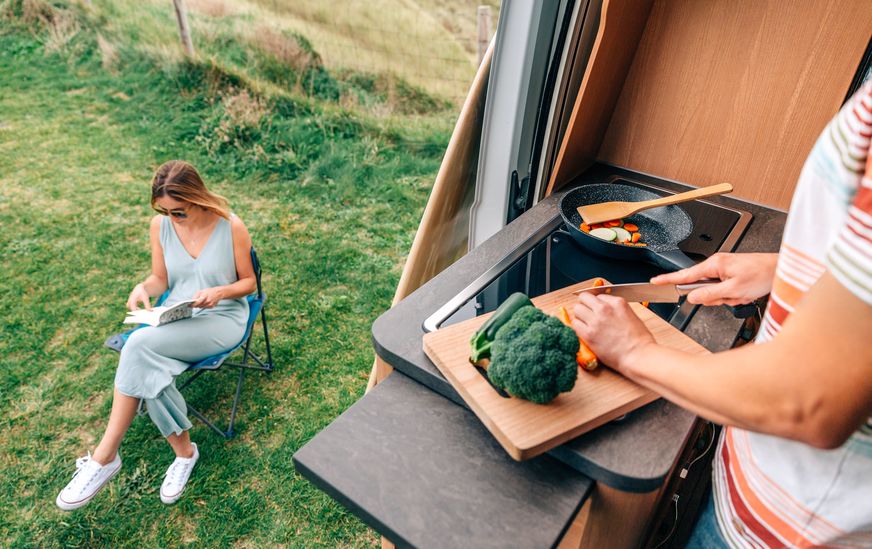
 Living in a converted bus offers the freedom to travel, explore new places, and enjoy a simpler lifestyle. However, when your kitchen is much smaller than what you’re used to, everyday activities like cooking and grocery shopping can take a little more planning.
Whether you’re living in a converted school bus full-time or taking extended road trips, preparing meals in a limited space doesn’t have to be complicated. With a little organization and some creative meal planning, you can still enjoy homemade meals without needing a full-sized kitchen or an endless supply of ingredients.
Here are some practical meal-planning tips to make cooking during bus life easier.
Keep Meals Simple and Easy to Prepare
When you’re working with limited counter space, fewer appliances, and a smaller kitchen, simple meals are often the best option.
One-pot dishes like soups, stews, pasta, and stir-fries can be especially convenient because they require minimal equipment and cleanup. Sandwiches, wraps, salads, and breakfast scrambles are also easy options that don’t require much preparation.
Try creating a list of your favorite meals that use just a few ingredients. Having reliable recipes to fall back on can make deciding what to cook much easier, especially after a long day of traveling.
Plan Meals Around Similar Ingredients
One of the easiest ways to save space and reduce food waste is to choose meals that use many of the same ingredients. For example, vegetables purchased for a stir-fry could also be used in wraps, soups, or breakfast scrambles throughout the week. Rice, beans, pasta, and other versatile staples can serve as the foundation for several different meals.
Planning a few days of meals ahead of time can help you avoid buying ingredients that take up valuable storage space but rarely get used.
Make the Most of Your Food Storage Space
Storage is one of the biggest challenges of cooking in a converted bus. Unlike a traditional home, you may have limited cabinets, refrigerator space, and pantry storage.
Consider keeping nonperishable essentials like rice, pasta, canned vegetables, beans, and oatmeal on hand. Stackable containers can help keep everything organized while making better use of available cabinet space. Since everything needs to stay in place while the bus is moving, consider using containers with secure lids and cabinets with latches to prevent items from shifting or falling during travel.
It’s also important to think about refrigeration. According to FoodSafety.gov, refrigerated foods should be kept at 40°F or below, and perishable foods should generally be refrigerated within two hours, or one hour when temperatures exceed 90°F.
Keeping food properly stored is especially important when traveling through areas with changing temperatures or limited access to electricity.
Shop Smaller and More Frequently
Buying groceries in bulk might make sense in a traditional home, but it isn’t always practical when living on a bus. Instead, consider purchasing smaller amounts of fresh ingredients and restocking whenever you have access to grocery stores.
Planning your shopping stops around your travel route can help you avoid running out of essentials while preventing your kitchen from becoming overcrowded. It’s also helpful to keep a few easy, nonperishable meals available for days when grocery stores aren’t nearby.
Design Your Bus Kitchen Around Your Needs
If you’re still planning your bus conversion, think about how you want to cook before deciding on your kitchen layout. Some people prefer a compact setup with a small refrigerator and portable cooking equipment, while others want more counter space, additional appliances, and larger storage areas.
Your cooking habits can influence the type and size of bus that works best for your project. If you’re just getting started, our guide on choosing the right bus for your conversion offers helpful considerations before making a purchase.
Make Bus Living Work for Your Lifestyle
Cooking in a small space may require a few adjustments, but it doesn’t mean sacrificing your favorite meals. By planning ahead, choosing versatile ingredients, and making the most of your storage space, you can create a meal routine that works wherever the road takes you.
If you’re thinking about converting a bus into your next home on wheels, finding the right vehicle is an important first step. At Northwest Bus Sales, we offer a variety of new and used school buses in different sizes and configurations that can serve as the starting point for your conversion project. Browse our full bus inventory today to explore your options and find a bus that fits your lifestyle.
